

Part of these collections
Leer en español: Aprender juntos
How cultural diversity enriches the lives of the children we serve
One of the most beautiful things about having a clinic located in such a culturally diverse part of Nashville is the opportunity for children to learn alongside other children whose backgrounds and experiences may be very different from their own.
At our therapy center, we have children whose families come from different countries, who speak different languages, and who have different traditions and ways of interacting with the world.
They are also children of different ages, with different abilities, different communication skills, and different behavioral challenges.
And every day, they have opportunities to learn alongside one another.
More Than Learning to Tolerate Differences
We often talk about teaching children to tolerate differences.
Certainly, tolerance is important. Children need to learn that other people may behave differently, communicate differently, or have preferences that are not the same as their own.
But I hope we can accomplish something more than tolerance.
I want children to learn to appreciate relationships with people who are different from them.
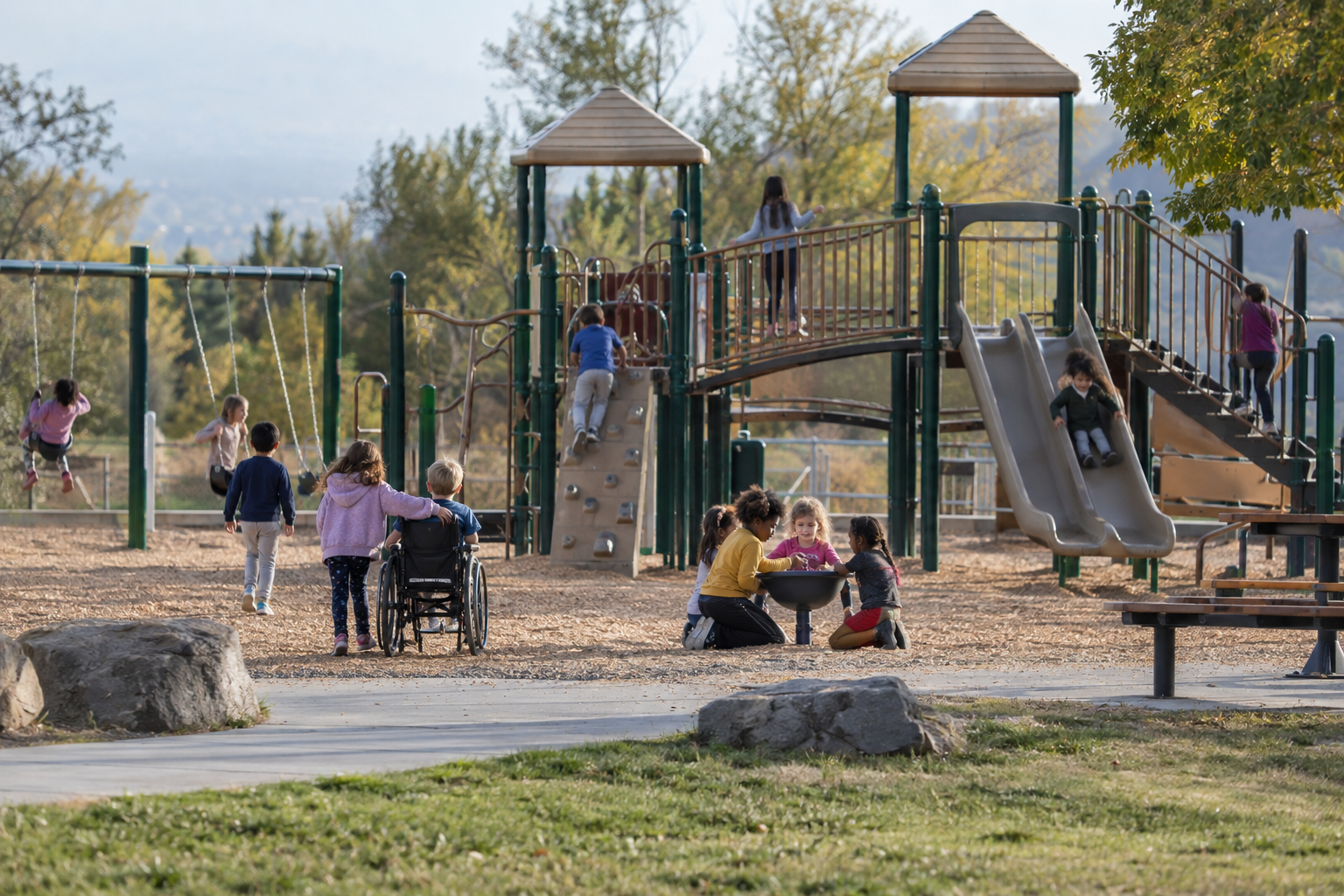
At our clinic, we see friendships develop among children of different ages, backgrounds, and languages. Children who might not otherwise have opportunities to know one another spend time learning, playing, and participating in activities together.
They begin to recognize one another as people with whom they can share enjoyable experiences.
And in many ways, those relationships develop quite naturally.
Children may not share the same language or communicate with the same degree of fluency. One child may use spoken language, another may use pictures or a communication device, and another may still be developing the skills necessary to communicate effectively.
But they can still enjoy being together.
They can play alongside one another, participate in group activities, laugh at the same things, and learn from watching one another.
These experiences have value beyond the particular instructional goals we may be targeting at the moment.
Learning to Trust Adults
Many of the children who come to our clinic have had experiences that make them reluctant to learn from adults.
Some have experienced repeated failure. Others have been in situations where adults did not understand their needs or respond to them in helpful ways. Some may simply have learned that instructional situations are difficult, frustrating, or unpleasant.
When these children first begin therapy, they may resist participating in activities. They may cry, scream, avoid instruction, or engage in other behaviors that make it difficult for staff to involve them in the learning process.
Sometimes our less experienced therapists become concerned when this happens.
They worry that the child will not enjoy being at the clinic or that the child will never become comfortable participating in the activities we have planned.
I try to reassure them that this is often part of the process.
What I encourage our staff to do is to plan rich, exciting, and enjoyable experiences for the children every day.
And then I encourage them to follow through with those plans, even when the children are not initially as excited about the activities as we might like them to be.
We remain calm and patient. We continue offering opportunities to participate. We arrange activities so that children can experience success, enjoyment, and positive interactions with adults.
We do this consistently, day after day.
Over time, children often begin to recognize that there is fun to be had.
They begin to lower their guard a little bit. They become more willing to approach activities, participate with adults, and try things that initially seemed unfamiliar or difficult.
In many cases, within a few weeks to a couple of months, we see children become more relaxed, content, and engaged.
They begin participating more and more.
Of course, every child is different, and there is no particular timeline that applies to everyone. We also need to respond to distress, examine why activities may be difficult, and make appropriate adjustments rather than simply expecting children to endure experiences that are overwhelming or aversive.
But the general principle is important.
We cannot demand that children trust us. We need to give them reasons to trust us.
And one of the best ways to do that is to consistently provide experiences in which learning is enjoyable and adults are predictable, patient, and kind.
Learning From One Another
As children become more comfortable in the clinic, they also have opportunities to learn from one another.
They see other children participating in activities, using communication skills, solving problems, and enjoying relationships with adults and peers.
Sometimes a child who is reluctant to participate in an activity with an adult becomes more interested when another child joins in.
Sometimes a child who has acquired a particular skill becomes a model for another child who is still learning it.
And sometimes the most meaningful thing that happens during an activity is not the acquisition of a specific instructional target, but the development of a relationship.
A child learns that another child enjoys playing with them. They learn to share an experience, wait for another person, respond to someone else’s communication, or invite another child to participate.
These are important experiences, and they can occur across differences in language, culture, age, and ability.
Seeing the Person Beyond the Differences
I hope that the experiences children have in our clinic influence the way they approach relationships throughout their lives.
When they encounter people whose language, appearance, traditions, or ways of interacting differ from their own, I hope they will be able to look beyond those differences and recognize the person.
I hope they will be willing, and even eager, to develop relationships with people whose lives are different from theirs.
And I hope they will have learned, through their own experiences, that those relationships can be rich and enjoyable.
This is one of the reasons I value the diversity of the families we serve so much.
We have the opportunity not only to teach children important communication, social, and daily living skills, but also to help them experience a world in which people from different backgrounds learn and grow together.
What We Learn as Adults
The same opportunity exists for the adults who work with these children.
We have the privilege of knowing families whose histories and experiences may be very different from our own.
We learn about their languages, their traditions, their parenting styles, their challenges, and their hopes for their children.
Sometimes we discover that our assumptions were incomplete. Sometimes we learn a better way to approach a problem. Sometimes we simply come to appreciate a perspective that we had never considered before.
And sometimes we discover that, despite all the differences between us, we share many of the same hopes.
We want children to be safe. We want them to learn. We want them to experience meaningful relationships. We want them to develop the skills they need to live good lives.
We want them to know the joy of learning and the value of kindness.
Those shared hopes give us a foundation upon which to build relationships and develop meaningful interventions.
Cultural diversity is not simply something we must accommodate in order to provide effective services. It is an opportunity to expand our understanding of people and to enrich the lives of the children we serve.
If we approach that opportunity with humility, patience, and genuine respect, we may find that we are learning and growing right alongside them.
References
- Roorda, D. L., Koomen, H. M. Y., Spilt, J. L., & Oort, F. J. (2011). The Influence of Affective Teacher–Student Relationships on Students’ School Engagement and Achievement. Review of Educational Research, 81(4), 493–529. https://doi.org/10.3102/0034654311421793
- Dueñas, A. D., Plavnick, J. B., & Goldstein, H. (2020). Effects of a Multicomponent Peer Mediated Intervention on Social Communication of Preschoolers With Autism Spectrum Disorder. Exceptional Children, 87(2), 236–257. https://doi.org/10.1177/0014402920953761
- Pettigrew, T. F., & Tropp, L. R. (2006). A meta-analytic test of intergroup contact theory. Journal of Personality and Social Psychology, 90(5), 751–783. https://doi.org/10.1037/0022-3514.90.5.751