

Part of these collections
Leer en español: Por qué un niño se comunica en terapia, pero no en casa
Helping communication skills carry over into everyday family life
A parent sometimes tells me something like this: “I hear she’s talking at therapy, but she doesn’t do that at home.”
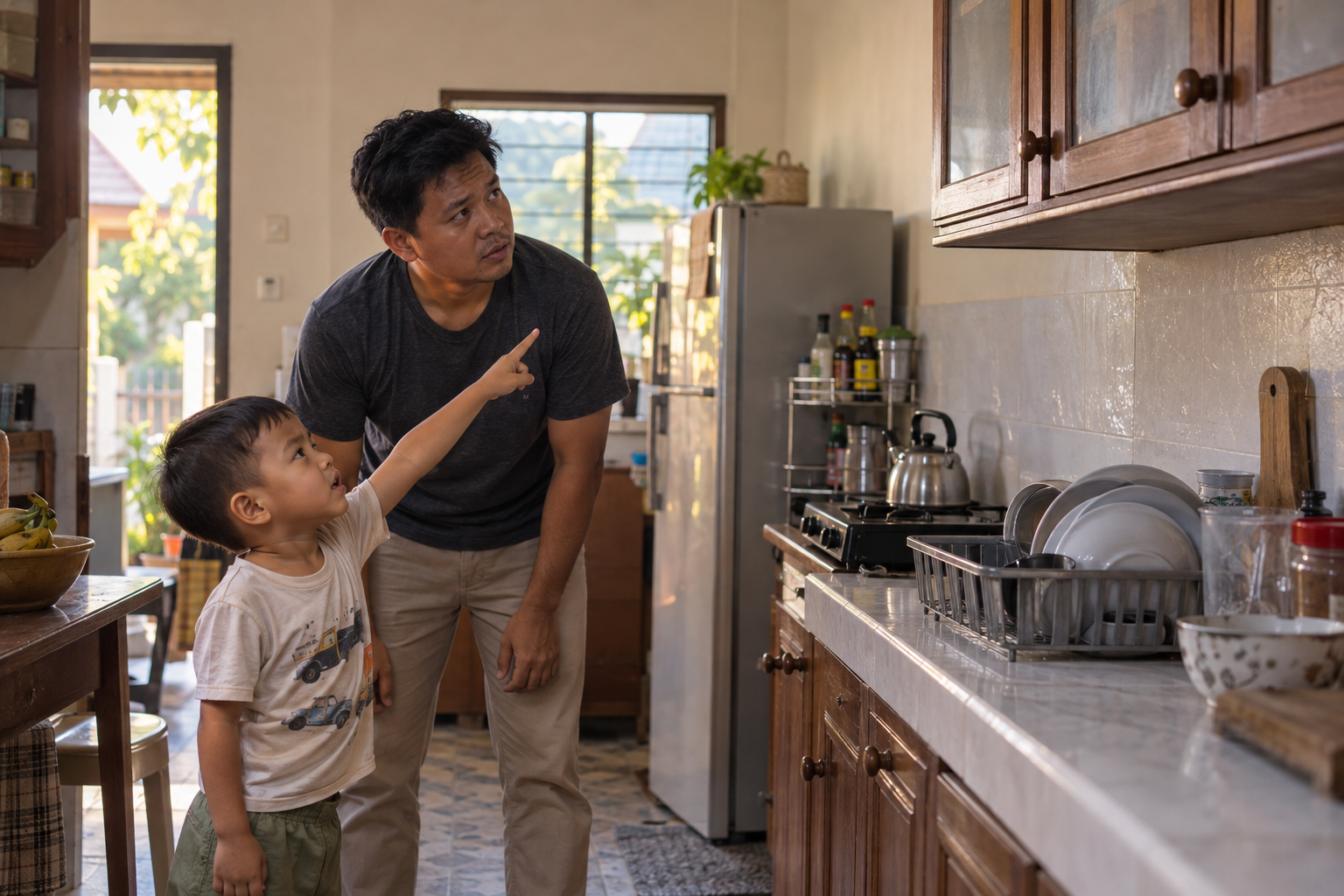
The child may be using pictures, signs, or emerging speech during therapy sessions. She requests activities, answers simple questions, and communicates with familiar therapists. But when she gets home, she points, gestures, or waits for someone to figure out what she wants.
It can be tempting to conclude that the child is being lazy or refusing to use skills she already possesses. I think there is usually a more useful way to understand what is happening.
The child has learned to communicate in one environment, with particular people, under particular circumstances. She has not necessarily learned that the same communication skills will work everywhere. This is a problem of generalization, and it deserves thoughtful attention.
Children Learn What Works in Different Places
All of us behave differently depending on where we are and whom we are with. We speak differently with close friends than we do during a professional meeting. We follow different routines at home than we do at work. We learn what is expected in each environment, often without consciously thinking about it.
Children do the same thing. A child may learn that her therapist expects her to use a picture to request the trampoline. The therapist makes the communication book available, provides prompts when needed, and responds enthusiastically when she communicates.
At home, the child’s older brother may recognize immediately that she wants a particular snack and simply hand it to her. Both adults care about the child. But the two environments provide different learning experiences.
At therapy, the child has repeated opportunities to practice communication. At home, her needs may be anticipated before she has an opportunity to express them. We should not be surprised when her behavior differs.
Generalization Requires More Than Hoping
When we teach a skill in one setting, we cannot assume it will automatically appear in another. We need to help the child use that skill with different people, in different locations, and during different activities. This does not mean turning the family home into a therapy clinic.
It means identifying a few ordinary situations where communication can become more useful. Perhaps the child regularly asks for juice, wants to watch a favorite video, or needs help opening something. Those are natural opportunities for a family member to model and encourage communication.
The goal is not to create more work for the child or the family. It is to help the child discover that the same communication skills work outside the therapy room.
Make the Communication System Easy to Use
A communication system is only useful when the child can access it and the people around her know how to support it. For some children, an electronic communication device is appropriate and highly effective. For others, a portable picture-based system may be easier for the family to use consistently. Some children benefit from both.
The important thing is to individualize the system rather than assume that one method is best for everyone.
If a child already has an AAC device, the team should work with the family and speech-language pathologist to make sure it is available, functional, and supported. A simple picture book may provide useful additional access, but it should not unnecessarily replace a more capable communication system. A practical communication book might include commonly requested items, important people, basic needs, emotions, and words such as help, stop, more, and finished.
It does not need to be beautiful or complicated to be useful. The pictures need to make sense to the child, be available when needed, and help her communicate things that matter.
Start With a Few Opportunities
Families are busy. Parents work, prepare meals, manage transportation, care for other children, and handle responsibilities that therapists may never see. It is unrealistic to expect a parent to reproduce an entire therapy program after a long workday.
Instead, I would begin with a few predictable moments. Perhaps the child requests a drink after arriving home. A family member can make the communication system available, model the request, and respond when the child communicates.
Perhaps the child wants a particular television program. The adult can offer an opportunity to identify the program or communicate “watch.” Perhaps the child is upset when someone leaves. The adult can model “sad,” “miss Mom,” or another appropriate message and respond with reassurance.
These small interactions can make a difference when they occur consistently.
Teach Family Members What to Do—and Why
Older siblings may be especially accustomed to anticipating a child’s needs. They may know exactly what she wants from the smallest gesture. That familiarity is a wonderful expression of their relationship, but it can also reduce opportunities for the child to practice more independent communication.
We can help siblings understand the goal without making them feel that they have been doing something wrong. Instead of saying, “Stop giving her everything,” we might explain: “She is learning new ways to tell us what she wants. When you know what she wants, show her how to ask for it. Give her a chance to communicate, and then respond.”
We can demonstrate what this looks like and keep the expectations simple. It is also important that family members understand that communication includes pictures, gestures, signs, devices, and speech. We want to encourage development, not make a child feel that her existing communication attempts no longer count.
Celebrate Communication Instead of Demanding Performance
When a child produces a new word, it can be an exciting moment. We should celebrate those accomplishments. Children benefit from knowing that the people around them notice their progress and enjoy communicating with them.
But there is a difference between celebrating emerging speech and pressuring a child to perform. Repeatedly insisting, “Say it. Say it again. I know you can say it,” may make communication less enjoyable, particularly when the child is tired or frustrated.
A better approach is to model language, create opportunities, respond to communication, and reinforce progress naturally. We want the child to associate communication with connection and success.
Consistency Does Not Mean Everyone Must Act Identically
A therapist may use a carefully planned prompting procedure. A parent may simply model a word during dinner. A sibling may encourage the child to use a picture while playing. Those interactions do not have to look exactly alike.
What matters is that they support the same general goals. The child should have access to her communication system. Her attempts to communicate should be acknowledged. Adults should model useful language and create opportunities for independent communication.
We should also coordinate vocabulary and teaching strategies so that the child is not receiving contradictory expectations. Consistency is about the principles guiding our interactions, not about turning every family member into a therapist.
Help Families Succeed With What They Have
When we work with families, we need to consider their actual circumstances. A parent may be raising several children alone, working multiple jobs, or managing significant emotional and financial stress. Even a parent who deeply values communication may have limited time and energy to practice new strategies.
Our responsibility is to make the intervention accessible. That might mean preparing a starter set of pictures, demonstrating three common communication opportunities, or helping siblings learn how to respond.
It might mean choosing a simple system the family can use immediately rather than expecting them to master complicated technology. We should be willing to adapt our teaching to the family’s life.
The best intervention is not necessarily the most elaborate one. It is the one that can be used meaningfully and consistently.
The Goal Is Independence, Not Perfect Compliance
Ultimately, we want children to communicate because communication helps them participate more fully in life. We want them to ask for what they need, tell others when something is wrong, express preferences, and develop relationships with people who may not know them well.
We want those skills to work at therapy, at home, at school, and in the community. That requires collaboration between professionals and families, but it should not require families to recreate a clinical environment.
A child should not have to enter a therapy room to discover that her voice matters. The more we help communication work in ordinary life, the more useful and independent that communication becomes.
References
- Stokes, T. F., & Baer, D. M. (1977). An implicit technology of generalization. Journal of Applied Behavior Analysis, 10(2), 349–367. https://doi.org/10.1901/jaba.1977.10-349
- American Speech-Language-Hearing Association. (n.d.). Augmentative and alternative communication (AAC). https://www.asha.org/practice-portal/professional-issues/augmentative-and-alternative-communication/